Avegant's light field tech gives hope to a mixed-reality future
Virtual reality has arrived. With top of the line adapt like the Oculus Rift, the HTC Vive and PS VR (and portable agreeable models like the Gear VR and Google's DayDream) available for well over a year now, it's protected to state that VR is staying put. The condition of increased reality, nonetheless, is far murkier. While much has been said in regards to items like Microsoft's Hololens and the secretive Magic Leap, shopper cordial AR still appears decades away. In any case, a current demo from a Bay Area startup has given me trust that the eventual fate of AR could really be a considerable measure nearer than we suspected.
The startup is Avegant, an organization you may definitely know. A couple of years back, it made the Glyph, an individual diversion focus that looks (and acts) like a couple of earphones. In the meantime as it was making Glyph, nonetheless, the whirl and energy around VR and AR was noticeable all around, and it was difficult to overlook. "Everything was advancing to more wearable figuring gadgets," said Edward Tang, Avegant's CEO. "So we investigated it."
The group soon found that there was a key issue with a significant part of the straightforward, blended reality shows out there - and it's that every one of them have a settled point of convergence. You could stick virtual things to a divider and control them remotely with controllers, yet you couldn't get very close. "The genuine experience I need to have is, I need to have the capacity to simply stroll up to something and hold it or touch it, and have something feel like it was directly before me," says Tang. "Toward the day's end, on the off chance that you need to show something inside about a meter, the concentration should be right."
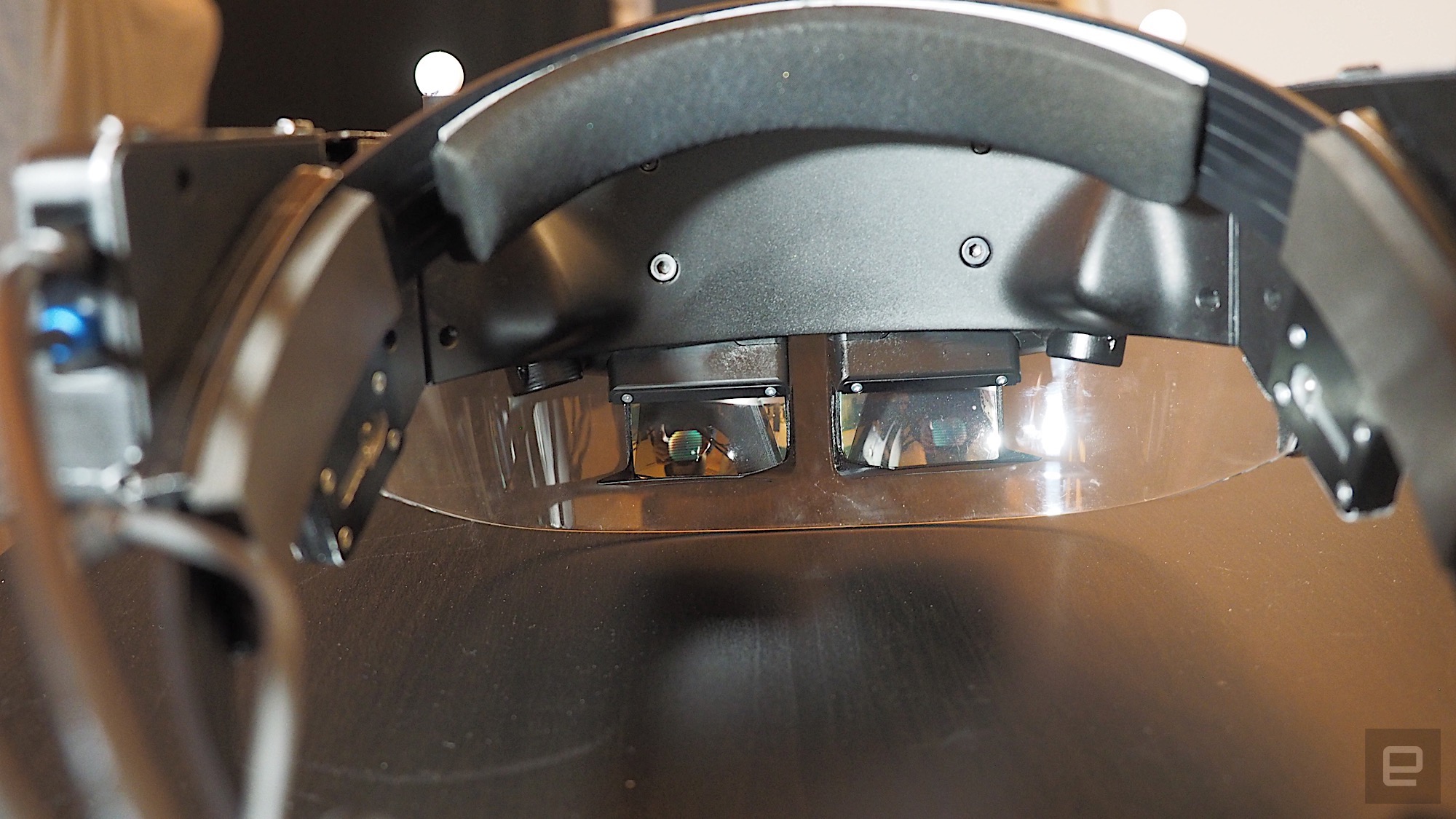
The arrangement, as Avegant declared a month ago, was to investigate light field innovation. The innovation shows numerous central focuses in the meantime, implying that items seem hazy and sharp relying upon your core interest. To put it plainly, it impersonates the way you really find in this present reality.
Light field show advancements as of now exist - it's a similar tech that Magic Leap professedly utilizes - however Avegant says that those aren't generally possible in the exact close term. "They require insane PCs and a considerable measure of mechanical dynamic optics," says Tang. "There are some even minded issues between building an item like that and really transporting it in the following couple of years."
So Avegant concocted something new. It's a fresh out of the box new optical part that the organization says is a radical better approach for creating light field. The key contrast, as per Tang, is that Avegant's tech would have the capacity to utilize existing assembling methods and the current inventory network. "This enables us to scale in volume."
The organization wouldn't broadly expound as to what the enchantment segment really seems to be, however I got to experiment with a demo headset exhibiting the tech. I was conveyed to a faintly lit room in Avegant's office in Belmont, CA that was equipped with a few following sensors along the dividers and roof. Tang then gave me the headset, a really unpleasant designing model with tape at the edge and thick links associating it to a close-by PC.
My first demo occurred in the nearby planetary group. Very quickly, I was struck by how clear everything was. The space rocks coasting through space looked stick sharp - positively more honed than any HD show I've ever observed. Likewise, not at all like that of Microsoft's Hololens, the field of view on Avegant's model was tremendous. It felt like I had a 100-inch TV before my face. One reason for this lucidity is Avegant's past involvement with retinal imaging. the picture of that nearby planetary group was anticipated straightforwardly at me with a variety of little micromirrors.
As I strolled around, I found that at specific points, I could really move my concentration starting with one planet then onto the next, obscuring out the encompassing condition. For instance, when I was remaining alongside the Earth, the moon circled directly before me. When I concentrated specifically on the moon, the Earth blurred away from plain sight. Also, when I then moved my look back on the Earth, the moon obscured into the closer view. I was somewhat stunned and shocked by it, and I shouted so anyone can hear, "This is so bizarre!" But obviously, it shouldn't be strange by any means, since this is the manner by which we regularly observe. It's recently that I'm not used to taking a gander at virtual items along these lines.
I had a similar involvement in the following demo, which reenacted the sentiment being in a sea, with fish and turtles skimming around me. In addition, a school of fish would swim in and around a seat, as though they were utilizing it as a concealing spot. Swells of water would course around seats and tables. Everything felt so genuine, as though I was truly under the ocean. Avegant reveals to me this was finished with the assistance of those following sensors and the way that they mapped the physical protests early.
Maybe the most dreamlike experience I had was the point at which I communicated with a virtual individual. She had a touch of an uncanny valley vibe; she looked genuine, however not exactly sufficiently genuine. As I strolled nearer toward her, she grinned, and I could really observe the spots all over and the subtle elements of her eyelashes. As I left, her outward appearance changed to one of bitterness and disarray. Tang says this is a case of how you could have social encounters in AR. The evidence of-idea is surely there, however I need to concede the experience was excessively bizarre for me.
Obviously, the headset appeared here is still in its model stage, yet Tang reveals to me that the innovation is in reality quite develop. There is no reason that it can't be made accessible to shoppers today. To be sure, the PC that the model was appended to was only a standard gaming PC. The headset can even be furnished and adjusted to versatile chipsets, similar to that of NVidia's Tegra lineup or the most recent Snapdragon processor.
"We're no outsiders to building bleeding edge show advances and really putting up them for sale to the public in a manufacturable and reasonable way," says Tang. "We're not a science organization, we don't simply do look into. We really need to take these ideas and transform them into manufacturable things."
Still, Avegant is a little fish in an undeniably enormous lake. It just doesn't have the mindshare of greater, more settled contestants in AR. Enchantment Leap has millions more in speculation cash and a ton more buildup, and despite the fact that Microsoft's Hololens doesn't offer as great of an ordeal, it's no less than a real item that engineers can get their hands on. Furthermore, Facebook has declared that it's taking a shot at AR glasses of its own, which could match anything Avegant arrangements to do.
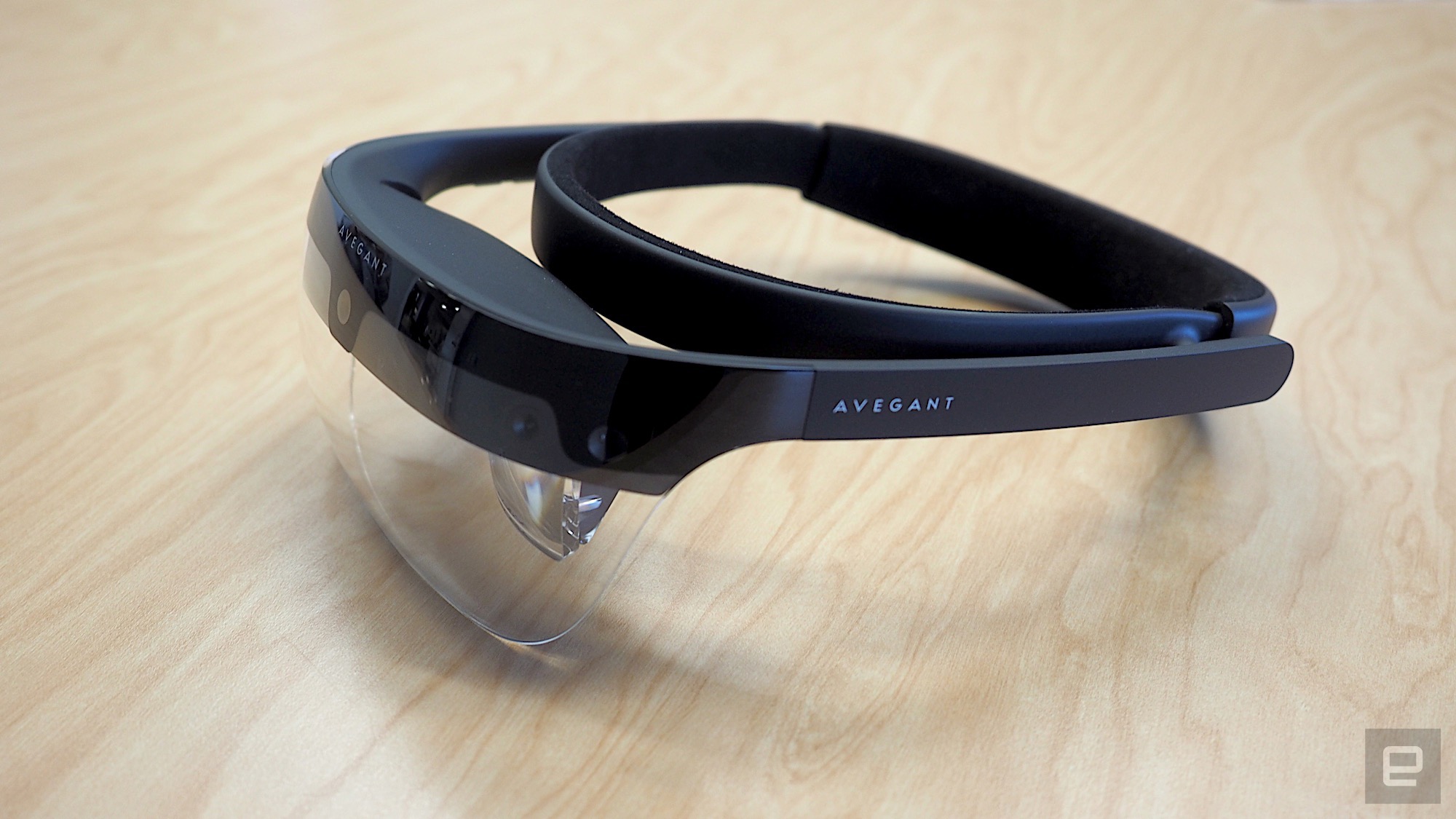
However, Avegant's light field innovation is still inconceivably encouraging. Tang even demonstrated to me a mockup of what the last Avegant light field headset may resemble, and it's a thin and lightweight issue that is miles more snappy than what Hololens looks like right at this point. Enchantment Leap is maybe the nearest to what Avegant is proposing, yet scarcely anybody has seen it in real life and it doesn't seem as though it'll be a reality at any point in the near future.
Yes, Avegant doesn't have the mindshare of the greater organizations specified here, yet at any rate it's endeavoring to drive AR forward. Regardless of the possibility that the organization doesn't in the end make it to the end goal, it could have offered a look into what reasonable buyer prepared AR will really resemble.
The startup is Avegant, an organization you may definitely know. A couple of years back, it made the Glyph, an individual diversion focus that looks (and acts) like a couple of earphones. In the meantime as it was making Glyph, nonetheless, the whirl and energy around VR and AR was noticeable all around, and it was difficult to overlook. "Everything was advancing to more wearable figuring gadgets," said Edward Tang, Avegant's CEO. "So we investigated it."
The group soon found that there was a key issue with a significant part of the straightforward, blended reality shows out there - and it's that every one of them have a settled point of convergence. You could stick virtual things to a divider and control them remotely with controllers, yet you couldn't get very close. "The genuine experience I need to have is, I need to have the capacity to simply stroll up to something and hold it or touch it, and have something feel like it was directly before me," says Tang. "Toward the day's end, on the off chance that you need to show something inside about a meter, the concentration should be right."
The arrangement, as Avegant declared a month ago, was to investigate light field innovation. The innovation shows numerous central focuses in the meantime, implying that items seem hazy and sharp relying upon your core interest. To put it plainly, it impersonates the way you really find in this present reality.
Light field show advancements as of now exist - it's a similar tech that Magic Leap professedly utilizes - however Avegant says that those aren't generally possible in the exact close term. "They require insane PCs and a considerable measure of mechanical dynamic optics," says Tang. "There are some even minded issues between building an item like that and really transporting it in the following couple of years."
So Avegant concocted something new. It's a fresh out of the box new optical part that the organization says is a radical better approach for creating light field. The key contrast, as per Tang, is that Avegant's tech would have the capacity to utilize existing assembling methods and the current inventory network. "This enables us to scale in volume."
The organization wouldn't broadly expound as to what the enchantment segment really seems to be, however I got to experiment with a demo headset exhibiting the tech. I was conveyed to a faintly lit room in Avegant's office in Belmont, CA that was equipped with a few following sensors along the dividers and roof. Tang then gave me the headset, a really unpleasant designing model with tape at the edge and thick links associating it to a close-by PC.
My first demo occurred in the nearby planetary group. Very quickly, I was struck by how clear everything was. The space rocks coasting through space looked stick sharp - positively more honed than any HD show I've ever observed. Likewise, not at all like that of Microsoft's Hololens, the field of view on Avegant's model was tremendous. It felt like I had a 100-inch TV before my face. One reason for this lucidity is Avegant's past involvement with retinal imaging. the picture of that nearby planetary group was anticipated straightforwardly at me with a variety of little micromirrors.
As I strolled around, I found that at specific points, I could really move my concentration starting with one planet then onto the next, obscuring out the encompassing condition. For instance, when I was remaining alongside the Earth, the moon circled directly before me. When I concentrated specifically on the moon, the Earth blurred away from plain sight. Also, when I then moved my look back on the Earth, the moon obscured into the closer view. I was somewhat stunned and shocked by it, and I shouted so anyone can hear, "This is so bizarre!" But obviously, it shouldn't be strange by any means, since this is the manner by which we regularly observe. It's recently that I'm not used to taking a gander at virtual items along these lines.
I had a similar involvement in the following demo, which reenacted the sentiment being in a sea, with fish and turtles skimming around me. In addition, a school of fish would swim in and around a seat, as though they were utilizing it as a concealing spot. Swells of water would course around seats and tables. Everything felt so genuine, as though I was truly under the ocean. Avegant reveals to me this was finished with the assistance of those following sensors and the way that they mapped the physical protests early.
Maybe the most dreamlike experience I had was the point at which I communicated with a virtual individual. She had a touch of an uncanny valley vibe; she looked genuine, however not exactly sufficiently genuine. As I strolled nearer toward her, she grinned, and I could really observe the spots all over and the subtle elements of her eyelashes. As I left, her outward appearance changed to one of bitterness and disarray. Tang says this is a case of how you could have social encounters in AR. The evidence of-idea is surely there, however I need to concede the experience was excessively bizarre for me.
Obviously, the headset appeared here is still in its model stage, yet Tang reveals to me that the innovation is in reality quite develop. There is no reason that it can't be made accessible to shoppers today. To be sure, the PC that the model was appended to was only a standard gaming PC. The headset can even be furnished and adjusted to versatile chipsets, similar to that of NVidia's Tegra lineup or the most recent Snapdragon processor.
"We're no outsiders to building bleeding edge show advances and really putting up them for sale to the public in a manufacturable and reasonable way," says Tang. "We're not a science organization, we don't simply do look into. We really need to take these ideas and transform them into manufacturable things."
Still, Avegant is a little fish in an undeniably enormous lake. It just doesn't have the mindshare of greater, more settled contestants in AR. Enchantment Leap has millions more in speculation cash and a ton more buildup, and despite the fact that Microsoft's Hololens doesn't offer as great of an ordeal, it's no less than a real item that engineers can get their hands on. Furthermore, Facebook has declared that it's taking a shot at AR glasses of its own, which could match anything Avegant arrangements to do.
However, Avegant's light field innovation is still inconceivably encouraging. Tang even demonstrated to me a mockup of what the last Avegant light field headset may resemble, and it's a thin and lightweight issue that is miles more snappy than what Hololens looks like right at this point. Enchantment Leap is maybe the nearest to what Avegant is proposing, yet scarcely anybody has seen it in real life and it doesn't seem as though it'll be a reality at any point in the near future.
Yes, Avegant doesn't have the mindshare of the greater organizations specified here, yet at any rate it's endeavoring to drive AR forward. Regardless of the possibility that the organization doesn't in the end make it to the end goal, it could have offered a look into what reasonable buyer prepared AR will really resemble.


No comments: